Join our Root-Cause Based Detox Programs: Group or Individual I

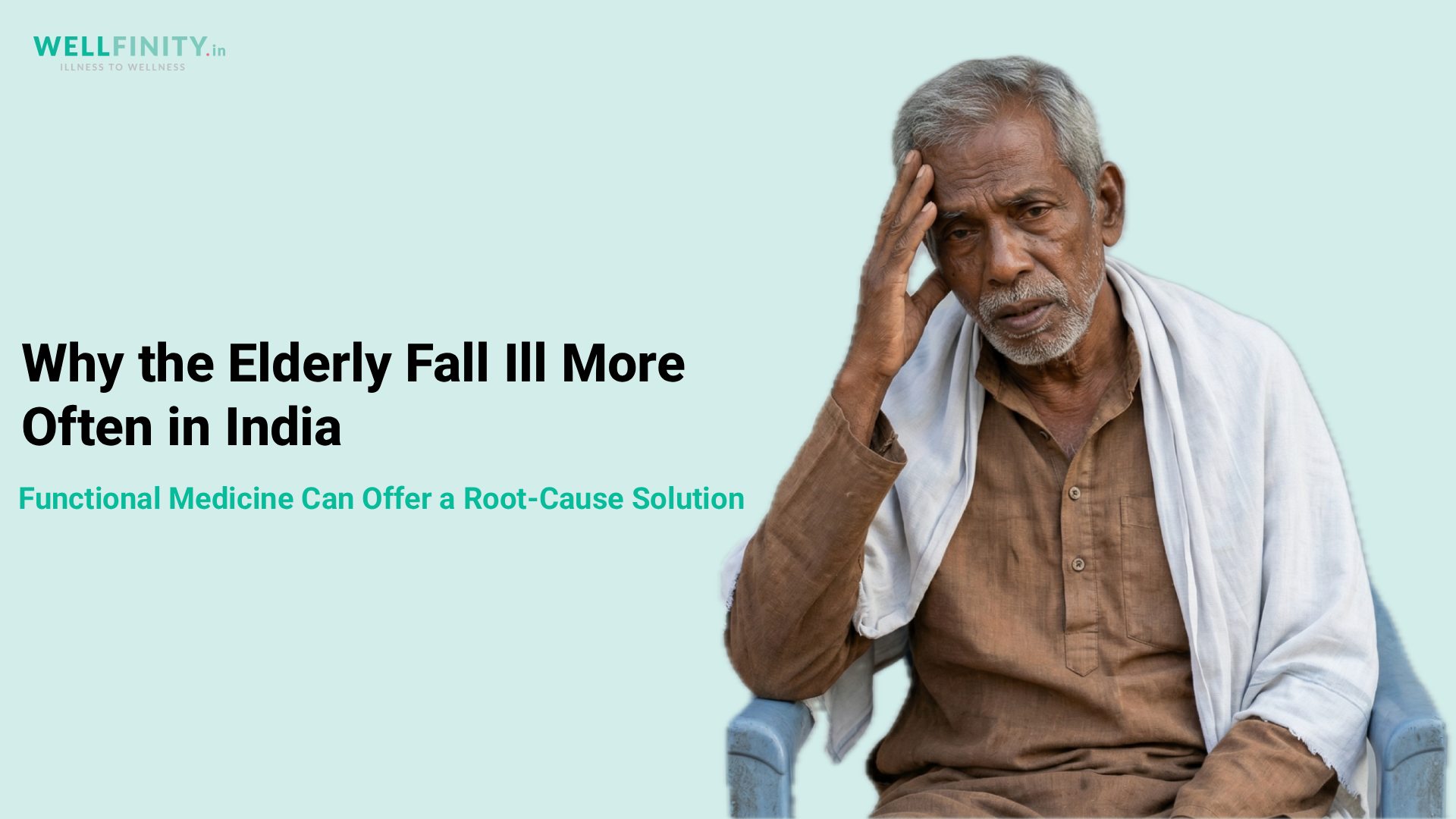
Aging is a beautiful, natural progression of life. In India, our culture is deeply rooted in respecting and caring for our elders. We often live in multi-generational homes, sharing our daily routines, meals, and lives with them. Our parents and grandparents are the pillars of our families, offering wisdom and stability.
However, India is undergoing a silent demographic shift. By 2030, over 190 million Indians will be above the age of 60, making elderly care one of the most urgent healthcare challenges in the country. Elderly individuals in India are falling sick more frequently due to a combination of immune aging, chronic inflammation, gut health issues, and nutritional deficiencies—factors that are often overlooked in conventional care.
As a physician practicing functional medicine for over a decade, I frequently hear a constant, underlying worry from the families who visit our clinic. People constantly ask me why their aging loved ones seem to catch every passing viral fever, or why a simple seasonal cough that takes a young person three days to beat takes an older adult three weeks to clear up.
In conventional medicine, the focus is almost exclusively on treating the immediate, acute infection. We prescribe antibiotics, antivirals, or cough suppressants and wait for the symptoms to pass. While this is necessary for acute care, at Wellfinity.in, and within the broader functional medicine community, we look deeper. We ask a fundamental question: Why is the host’s body suddenly so vulnerable? Functional medicine focuses on why the body became vulnerable in the first place.
To understand why our elders get sick more easily, we must examine the deep cellular and systemic shifts that occur with age. Let us break down the biological root causes of this vulnerability and explore how we can transition from merely reacting to illness to proactively building resilience.
This shift—from symptom management to root-cause resolution—is what will define the future of geriatric care in India.
Frequent illness in older adults is not random. It is driven by predictable biological changes, amplified by modern Indian lifestyle factors.
1. The Biological Reality of Immunosenescence: Age-Related Decline in Immune Function
The primary biological reason the elderly fall ill more frequently is a process known as immunosenescence. In simple terms, this is the gradual aging, deterioration, and weakening of the immune system.
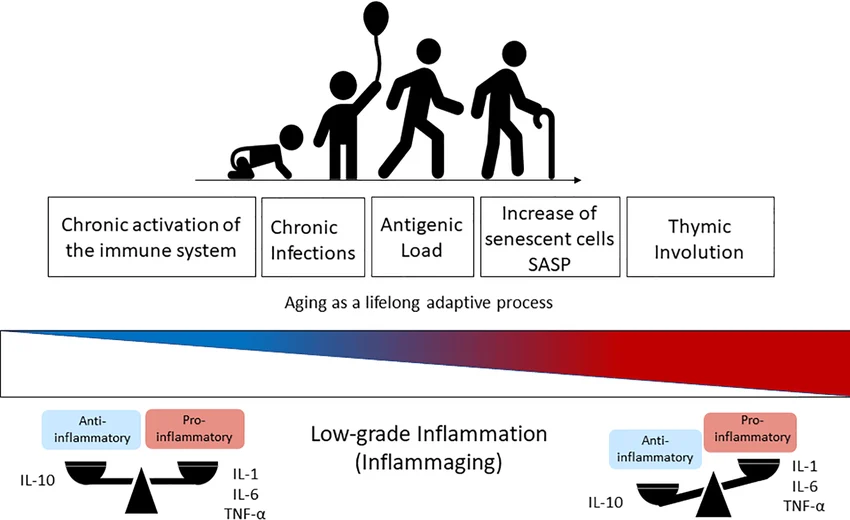
Think of your immune system as a highly specialized, internal security network. When we are young, this network of guards and rapid-response teams is quick, adaptive, and has a razor-sharp memory for past intruders. As we age, however, this defense system undergoes critical structural and functional changes.
The thymus, a small gland located behind the sternum, serves as the training ground for our infection-fighting T-cells. By the time we reach our 60s and 70s, the thymus shrinks drastically and is largely replaced by fatty tissue. This reduces the body’s ability to produce new, “naive” T-cells—the specific cells required to recognize and fight off novel viruses that the body has never encountered before.
Furthermore, our macrophages—the specialized cells that actively patrol the body to swallow up and destroy bacteria—become sluggish. Studies highlighted by the National Institutes of Health (NIH) show that this delayed cellular response allows infections to multiply and take hold much faster in older adults. Finally, our B-cells produce fewer antibodies, and the antibodies they do produce are often less effective at neutralizing threats.
2. “Inflammaging” and the Modern Indian Lifestyle: Chronic Low-Grade Inflammation
In functional medicine, chronic inflammation is a core focus of our diagnostic process. Acute inflammation, like the redness and swelling around a paper cut, is a healthy, vital healing response.
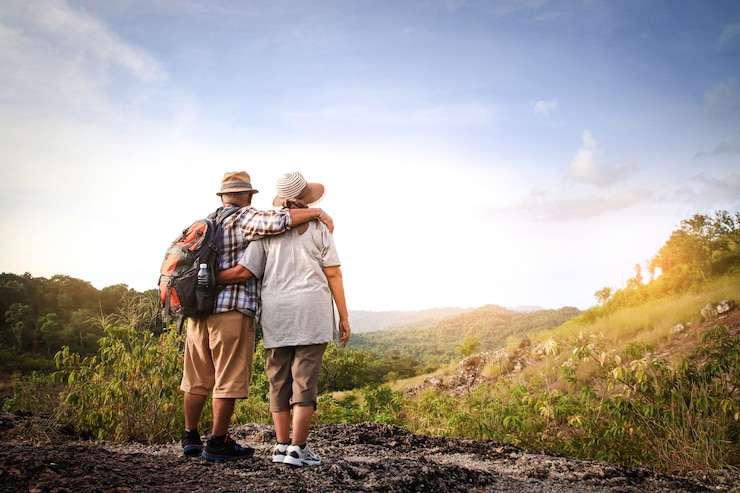
However, as we age, we often develop a simmering, low-grade, systemic inflammation known in the medical community as inflammaging. This acts like a constant, invisible fire within the body, keeping the immune system in a state of perpetual, exhausting high alert. Because the immune system is constantly distracted and depleted by fighting this background fire, it lacks the energy and reserves to mount a strong attack when a real external threat—like the influenza virus or a bacterial pathogen—enters the system.
In India, inflammaging is heavily driven by our modern dietary and lifestyle shifts. While our ancestors ate whole, unrefined foods, modern urban diets are heavily reliant on refined carbohydrates, sugary sweets, and highly processed, inflammatory seed oils (like refined sunflower or soybean oil). Coupled with a more sedentary lifestyle and rising environmental pollution in our cities, this creates a perfect storm for cellular damage.
According to research published in journals like the Journal of Clinical Immunology, inflammaging is not just a root cause of frequent infections, but also the underlying driver of chronic conditions such as osteoarthritis, cardiovascular disease, and cognitive decline.
3. The Gut Microbiome: Where Immunity Truly Begins
As the Co-Founder of India’s first Functional Medicine Association, I constantly remind our patients and peers of one vital, undeniable fact: Over 70% of your immune system resides in your gut.

A healthy human gastrointestinal tract is home to trillions of beneficial bacteria, fungi, and microbes. In traditional Indian households, our ancestors naturally supported this microbiome through daily consumption of fermented foods like homemade curd, buttermilk (chaas), and fermented kanji.
Unfortunately, as we age, the diversity of our gut bacteria naturally diminishes. A less diverse microbiome directly correlates with a weakened immune response. Furthermore, decades of frequent antibiotic use, the chronic use of antacids (which are heavily overprescribed and overused in India), and a shift away from traditional, fiber-rich, plant-based diets severely weaken the intestinal lining.
This leads to a condition known as intestinal permeability, or “leaky gut.” When the gut lining is compromised, undigested food particles, toxins, and bacteria leak directly into the bloodstream. The immune system flags these as foreign invaders, triggering massive systemic inflammation and further distracting the body from fighting actual respiratory or systemic infections.
4. Hidden Nutritional Deficiencies in Indian Elders
You cannot build a strong, impenetrable fortress without the right raw materials. The immune system requires a constant, daily supply of specific vitamins, minerals, and amino acids to function optimally.
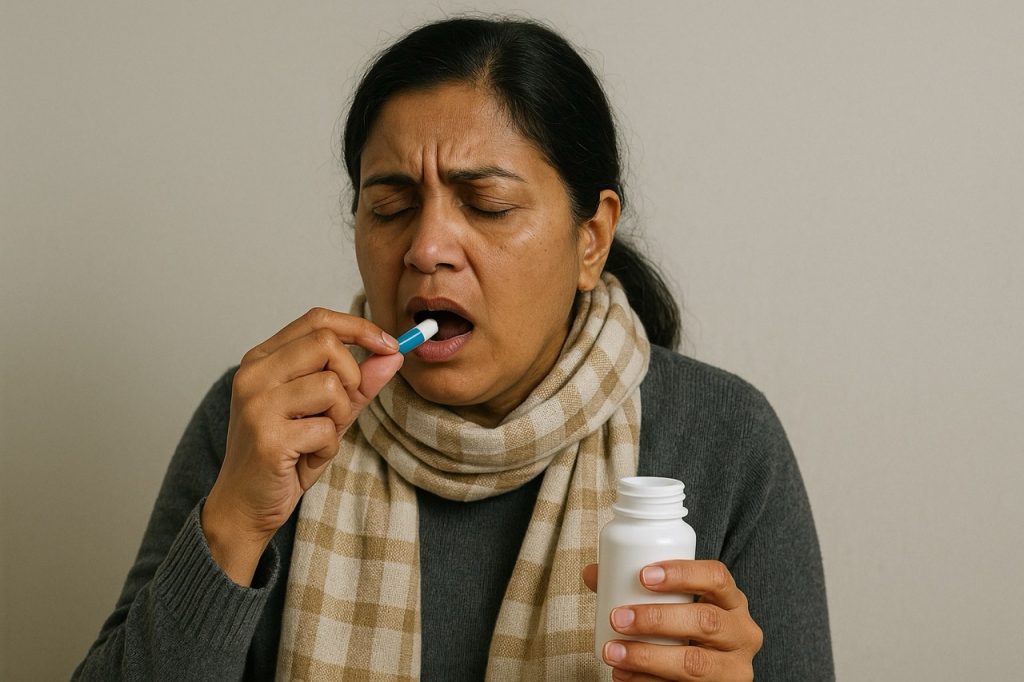
The most common causes of weak immunity in older adults include declining immune function, poor gut microbiome diversity, chronic inflammation, and low levels of key nutrients like Vitamin D, B12, zinc, and protein.Many elderly Indians suffer from severe nutritional deficiencies.
This is often not because they are eating poorly, but because their aging digestive systems simply cannot absorb nutrients efficiently. As we age, stomach acid production naturally declines (hypochlorhydria). Without adequate stomach acid, the body cannot break down food to extract the nutrients locked inside.
- Vitamin D: Often called the orchestrator of the immune system, Vitamin D deficiency is incredibly common in urban India, despite our abundant year-round sunlight. Older adults tend to spend less time outdoors, and aging skin is significantly less efficient at synthesizing this crucial immune-modulating vitamin. Low Vitamin D is directly linked to an increased risk of severe respiratory infections.
- Vitamin B12: This is a massive challenge, particularly within our heavily vegetarian population. B12 requires robust stomach acid to be separated from food proteins for absorption. Deficiencies lead to poor red blood cell formation, neurological issues, and severely weakened immune cells.
- Zinc and Protein: Zinc is crucial for T-cell development, but absorption drops as we age. Furthermore, protein intake is notoriously low among older Indians, who often rely on dal (lentils) as their primary source, which alone is rarely enough to maintain muscle mass or provide the amino acid building blocks necessary to synthesize antibodies.
- Optimizing protein intake is a critical yet often overlooked aspect of elderly care in India. As individuals age, both protein consumption and digestion tend to decline, leading to muscle loss, weaker immunity, and slower recovery from illness. It is therefore essential not just to increase protein intake, but to improve its quality and digestibility. For those following vegetarian diets, combining different protein sources strategically can significantly enhance amino acid availability. In some cases, incorporating easier-to-digest protein forms may also be necessary. This becomes particularly important because adequate protein is fundamental to maintaining muscle mass, supporting immune cell function, and enabling the body to repair and recover efficiently.
5. A Real-World Scenario: Rebuilding Resilience
To understand how this functional, root-cause approach looks in practice, let me share an anonymized case from our clinic.
Mr. Sharma, a 68-year-old retired banker from Delhi, was brought to us by his daughter after suffering from four severe respiratory infections in a single calendar year. His conventional blood work looked relatively “normal” for his age, and his previous doctors had simply advised him to rest and avoid cold weather.

However, our functional medicine testing revealed a very different story. A comprehensive stool analysis showed Mr. Sharma had a severely depleted gut microbiome with almost no protective Bifidobacteria. His blood panels revealed undetectable levels of Vitamin D3, suboptimal B12, and high markers of systemic inflammation (hs-CRP). Furthermore, his traditional vegetarian diet was very high in simple carbohydrates but severely lacking in bioavailable protein and healthy fats.
We did not just prescribe immune-boosting pills. We repaired his gut lining using targeted, high-quality probiotics, L-glutamine, and traditional healing spices like curcumin (the active compound in turmeric). We optimized his Vitamin D and B12 levels through highly bioavailable, sublingual (under the tongue) supplements that bypassed his weakened digestive tract.
We also worked with his family to shift his diet, incorporating more healthy fats like pure A2 ghee and cold-pressed coconut oil, complex prebiotic fibers, and adequate, easily digestible protein sources. Within six months, the clinical changes were remarkable. Mr. Sharma’s inflammatory markers plummeted, his daily energy returned to levels he hadn’t felt in a decade, and he went through the entire following winter season without a single infection.
6. The Functional Approach to Empowered Aging
In conventional settings, aging is often viewed as an unavoidable, steady, and unidirectional decline. In functional medicine, we believe we can profoundly optimize how the body ages. We cannot stop the clock, but we can drastically change how the body experiences the passage of time.
If we want to protect our elders and stop them from falling sick so easily, we must shift our focus from reactive symptom management to proactive health creation. Here are the core pillars we utilize at Wellfinity.in:
- Gut Restoration as the Foundation: We always begin by assessing and rehabilitating the microbiome. This involves identifying any hidden food sensitivities that may be causing inflammation, and reintroducing prebiotic fibers and targeted probiotics to restore the delicate balance of beneficial bacteria.
- Extinguishing Chronic Inflammation: We guide our patients toward a personalized, anti-inflammatory nutrition plan. This means drastically reducing refined sugars and processed seed oils, and embracing traditional, nutrient-dense Indian foods like diverse millets, local leafy greens, and antioxidant-rich spices.
- Targeted, Bioavailable Supplementation: Because digestion weakens with age, a good diet is rarely enough. Based on comprehensive functional lab testing, we use easily absorbable forms of nutrients—like liposomal Vitamin C, Vitamin D3 paired with K2, chelated Zinc, and methylated B-vitamins—to close critical nutritional gaps effectively.
- Managing Stress and Movement: We cannot separate physical immunity from nervous system health. Chronic stress and anxiety elevate cortisol, which heavily suppresses the immune system. We encourage the integration of traditional Indian practices like gentle Yoga, Pranayama (breathwork), and morning walks in the sunlight to lower stress hormones, improve lung capacity, and naturally regulate sleep cycles.
The Future of Geriatric Care in India: A New Paradigm for Our Golden Years
The cultural narrative that growing old automatically means becoming frail and constantly falling ill is one we need to challenge. Yes, the immune system changes as we get older. Immunosenescence, inflammaging, gut dysbiosis, and nutrient malabsorption are real biological hurdles. However, they are not a life sentence.
By taking a root-cause, functional approach, we can help our elderly population build truly robust and resilient immune systems. We can nourish their bodies properly, heal their digestion, lower systemic inflammation, and support their mental well-being.
At Wellfinity.in, our mission is not just to add years to life. We strive to add vibrant, independent, and illness-free life to those golden years. It is time we start treating the host, rather than just waiting in fear for the next infection.
If you are concerned about your own immunity or the health of an aging loved one, consider looking beneath the surface. Consulting with a functional medicine practitioner can help you uncover the hidden root causes of vulnerability and build a personalized, proactive roadmap to lasting health and vitality.